.png)


Going Viral - Review

Do you miss the ‘80s? When it was all neon lights and side ponytails, and most of all, no social media! Total freedom from your every move being recorded and scrutinised on the internet by strangers around the globe or even stereotypical bullies in your high school. Well, boy oh boy do I have the film for you!
I don’t actually, because in Going Viral, we are bathed in neon lights and everyone does have a side ponytail, but they also have social media…If the camera quality wasn’t so modern in this film, I would believe without any question that this was an ‘80s film, from the look, the acting, the characters’ motivations, this screams ‘80s.
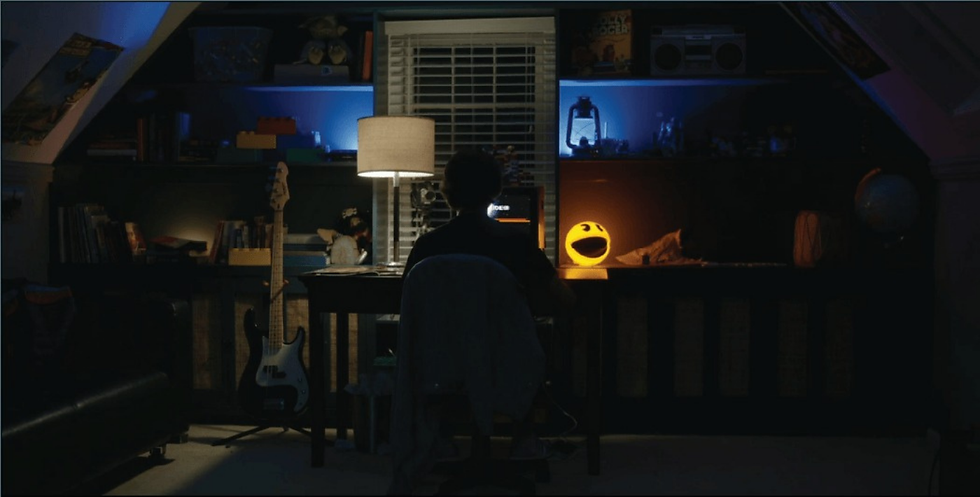
We’re thrust into the world with TV aerobics in appropriate spandex and some vectorwave graphics on a huge computer, luring us into an alternative reality where social media rules the lives of teens. The standard obsession in classic ‘80s films of being popular is heightened by the pressure to get likes on the video sharing social media platform, V-TV. Something odd is afoot though, as a variety of these virtual celebrities seem to be disappearing from the world, without so much as an outro begging for likes and subscribers.
When an aspiring viral prankster, Beckett O’Connell (Shea Pritchard) clicks on a pop-up ad on his computer, his life is flipped upside down. He no longer gets ignored by the popular girl, or humiliated by the bullies in his high school, instead, he’s now the talk of the school in the right way. His sister Kimberly (Krystyn Ryder) however, is still just as horrible to him, very much doing her duty as an older sibling.
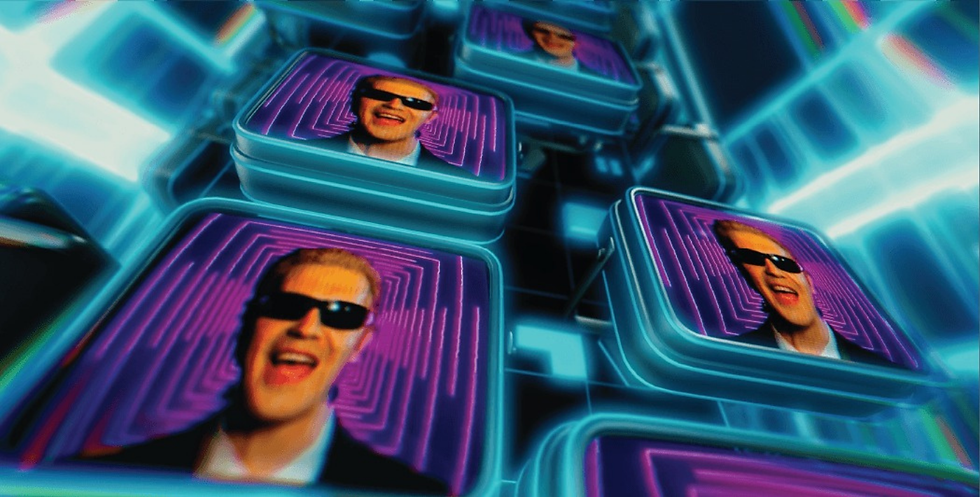
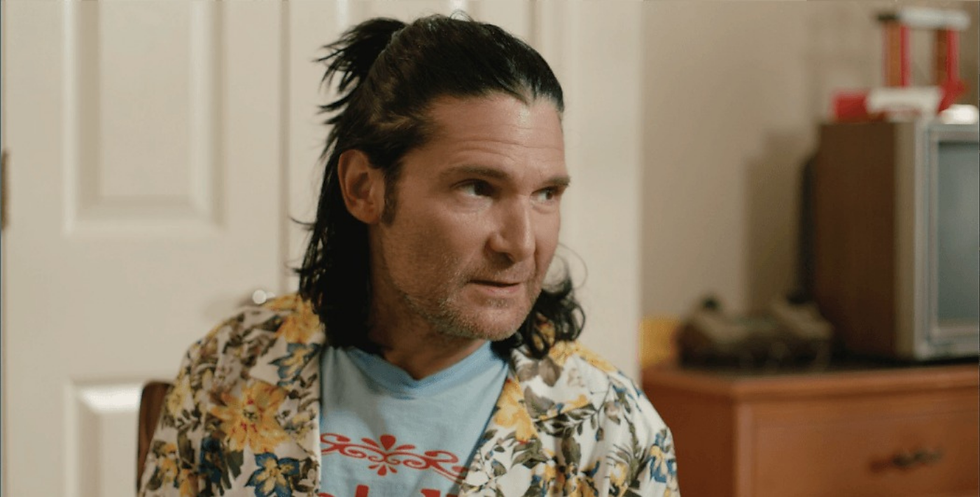
All of this fame and success comes as a result of the face behind the pop-up ad, Mr. Viral (Louis Kyper) who plays a cartoonishly evil villain in his pursuit of power. Soon after his success, Beckett’s friends, Carly (Alexis Moscoso) and Jay (Matt Alea) begin to see the fame getting to his head, and in search of answers, get wrapped up in Mr. Viral’s schemes. Beckett has to come to his senses, seeing Mr. Viral’s intentions for what they are, and stop him from taking over the minds of more social media obsessed teens. He won’t have to do it alone though, as reclusive gamer, Samurai (Corey Feldman) not only brings the knowledge of Mr. Viral’s intentions, but also the plan to stop him.

Going Viral is impressively immersive as an ‘80s time capsule, mostly thanks to the great production design and constant reminder of ‘80s slang in the dialogue. While not all of it worked, the VFX team (which is not a huge crew) manages to pull off some great effects that build an entire believable social media platform, and then inside of that, a full Tron style world where that social media platform lives. I think you get away with a lot of the film because of the charm of the era the story is set in.
I think where the look falls a little flat is in the camera, lighting and colour. Not because it’s all bad, because it’s inconsistent. There are some stylish scenes in pink lights or a virtual world soaked in blue, but in between those, you have painfully boring lighting that cheapens the look of the film overall. The style is pushed so far in some scenes that you are pulled from one extreme to another. One scene I did think looked pretty cinematic was actually Samurai’s introduction scene, simplistic but had something more to it that was missing from a lot of the rest of the film.
Pritchard is a great lead for this, he brings a really good charisma to the role, going on his Anne Hathaway, Princess Diaries transformation from nerd with glasses to irresistible heartthrob. Supporting characters don’t get enough to do for me, especially Jay, who is played really well by Alea, but his jokes are few and far between for the comedic relief best friend. I also think that Moscoso is criminally underused as Carly. To me, this felt like the biggest let down of the film, where you miss a lot of the build up between Beckett and Carly’s budding romance. Corey Feldman’s inclusion is very welcome, the stunt casting of an ‘80s icon as the all knowing reclusive key to the mystery is great. He also brings 100% to the role, wacky and fun in just the right tone.
The performances are supported by a pretty snappy edit that doesn’t linger on a moment for too long, but also doesn’t feel dizzyingly fast. You get a nice soundtrack of songs too, with the title sequence song being stuck in my head after I watched it. The rest of the music serves as bridges that are fitting for their scenes but certainly don’t stick out as memorable.
Speaking of memorable, while the design of V-TV looks great, it is a little hard to read at times, and when text messages on the V-Box (this world’s version of a phone) come up, the glow of the screen and true to the era font make it kind of hard to read. I found myself having to either squint to see it or pause when they came up.
The film ends a bit quickly, jumping from the conflict to resolution without much room to breathe. This is the only real issue I had with the pacing, where I think we could have let this sit for a moment, or at least not have the conflict resolved so quickly after such a long build up, like they were just ready to roll credits.
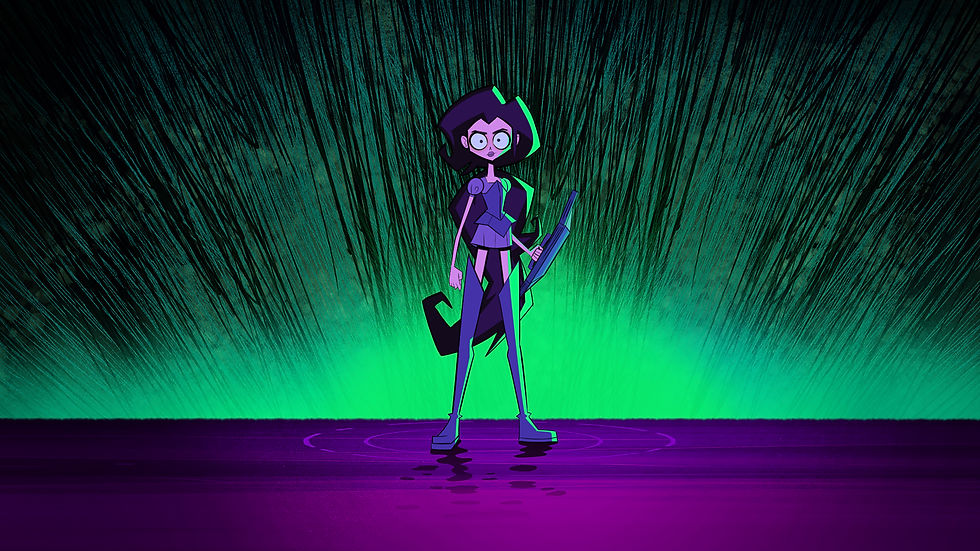
Speaking of credits, I always appreciate seeing some character in the roller, which had some good style to it, and also named all the background artists, nice! While not everything worked in Going Viral for me, it doesn’t feel like a hollow cash grab from filmmaker Vincent Vittorio. There is a clear intention behind the film, with commentary on the social media obsessed public and how even in the ‘80s, when people weren’t consumed by tech, the youth of then are just as susceptible to the predatory tactics of these companies to steal their time and attention.
Going Viral is available on VOD now (and if you do plan on watching, stay to the end for a nice little end credit sequence!).


Comments